
Your room looks right in daylight and wrong after dark. That is usually a lighting problem, not a decorating one. Here are seven common lighting mistakes, from relying on the ceiling fixture to using bulbs that are too cool, and what to do instead.
You can spend months getting a room right.
The furniture works. The paint color is good. The rug is the right size. Everything looks pulled together in daylight.
Then the sun goes down and suddenly the room feels… off.
Too bright. Too flat. Too harsh. Or somehow dim even though every light in the room is turned on.
That usually isn’t a decorating problem.
It’s a lighting problem.
Lighting affects much more than whether you can see what you’re doing. It changes how colors appear, how materials feel, where your eye naturally lands, and whether a room feels calm, warm, dramatic, intimate, or vaguely like the waiting room at a dentist’s office.
A well-designed room should work throughout the day, not just when natural light is doing most of the heavy lifting. It’s one of the most common reasons a room looks fine but still doesn’t feel right.
Here are seven common lighting mistakes that can make an otherwise beautiful room feel wrong at night, and what to do instead.
1. You’re Relying on the Ceiling to Do All the Work
One overhead fixture can technically illuminate a room.
It cannot usually make that room feel particularly good.
When all of your light comes from the ceiling, everything gets washed in the same general brightness. You lose shadows, contrast, depth, and the smaller pockets of light that make a room feel layered.
This is especially noticeable in living rooms and bedrooms, where you want the lighting to feel comfortable rather than purely functional.
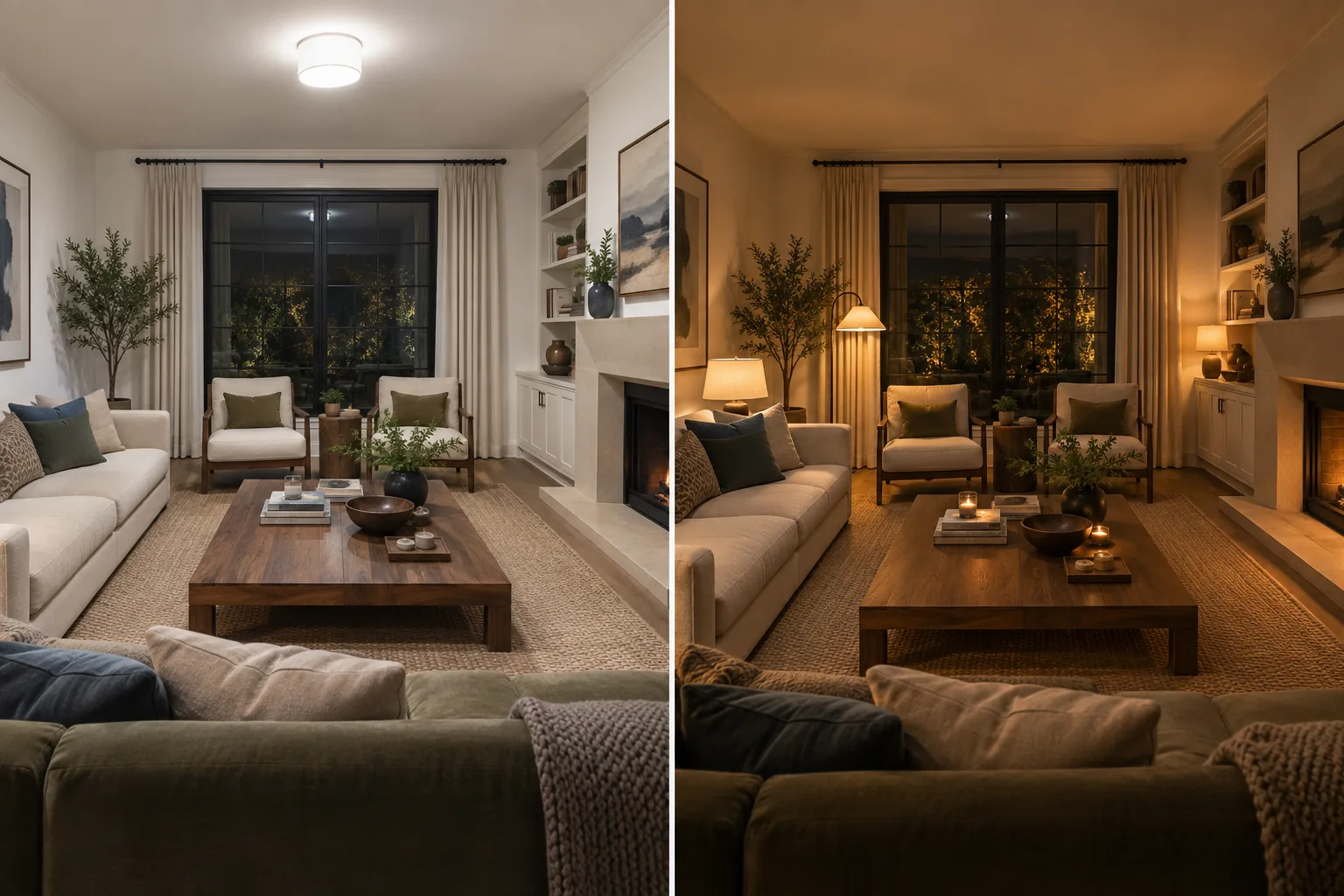
Instead, think in layers.
A room usually benefits from a combination of:
- Ambient lighting for overall illumination
- Task lighting where you actually need to see
- Accent lighting that draws attention to art, architecture, or objects
- Decorative lightingthat contributes to the room visually, even when it isn’t the primary light source
That might mean recessed lighting paired with table lamps, a floor lamp next to a chair, and a small picture light over a piece of art.
No single fixture needs to light the entire room.
In fact, it’s usually better when it doesn’t.
2. Every Light Source Is at the Same Height
Lighting gets much more interesting when it happens at different levels.
If every source is overhead, your eye experiences the entire room from the top down. It can make a space feel flat even if the furniture and architecture have plenty of dimension.
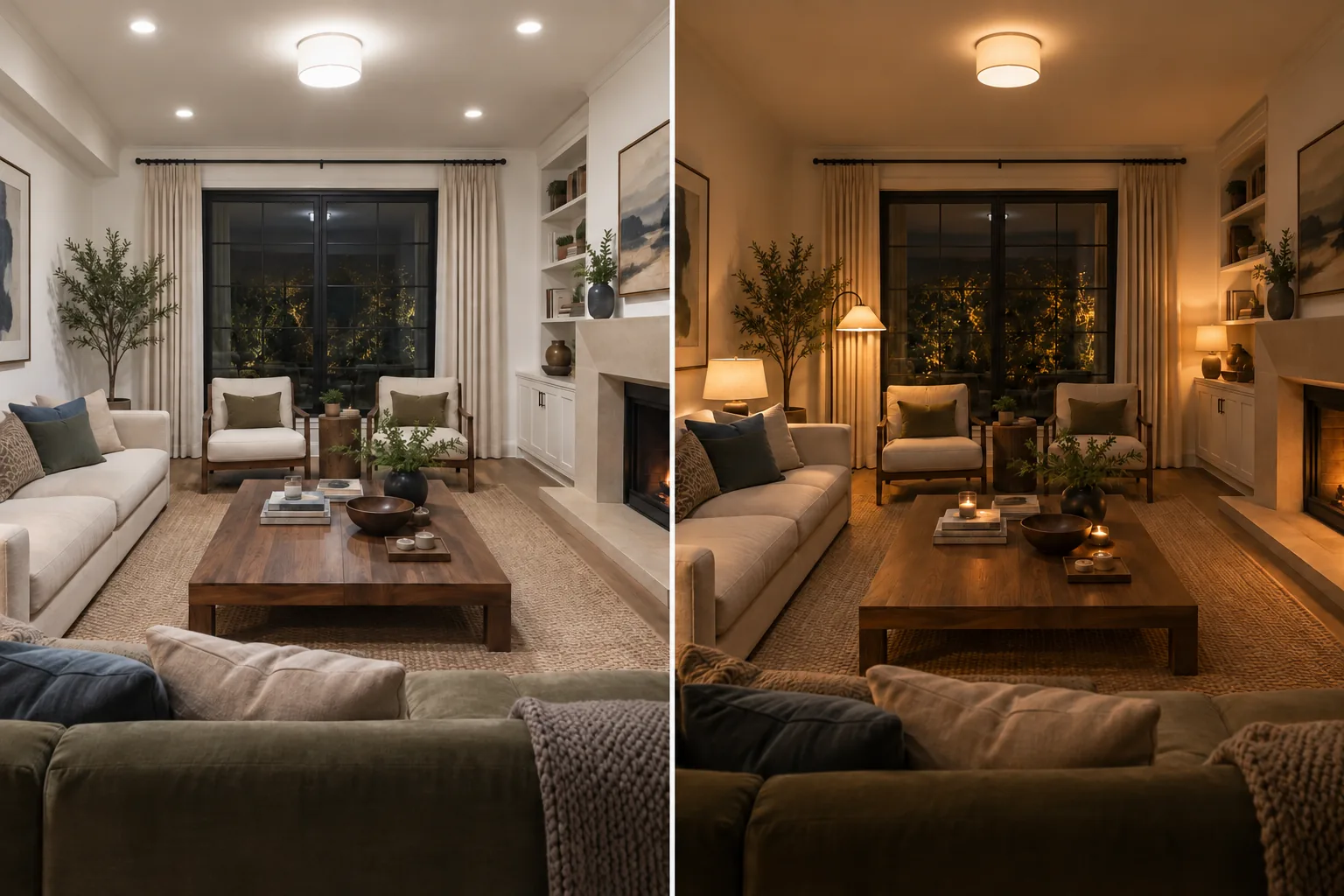
Bring some of the light lower.
Table lamps create light around eye level when you’re seated. Floor lamps can visually connect the lower half of a room with taller architecture. A small lamp on a console, kitchen counter, or bookshelf creates a softer glow closer to the surfaces you’re actually interacting with.
Even a single lower light source can dramatically change how a space feels.
Think of lighting almost like composition in a photograph.
Your eye needs brighter areas, darker areas, foreground, background, and somewhere to focus.
3. Your Light Bulbs Are Too Cool
This is one of the quickest ways to make a carefully designed room feel surprisingly unpleasant.
The color temperature of a bulb is measured in Kelvin, and the higher that number gets, the cooler and bluer the light tends to appear.
In most residential living spaces, I usually prefer lighting around 2700K to 3000K.
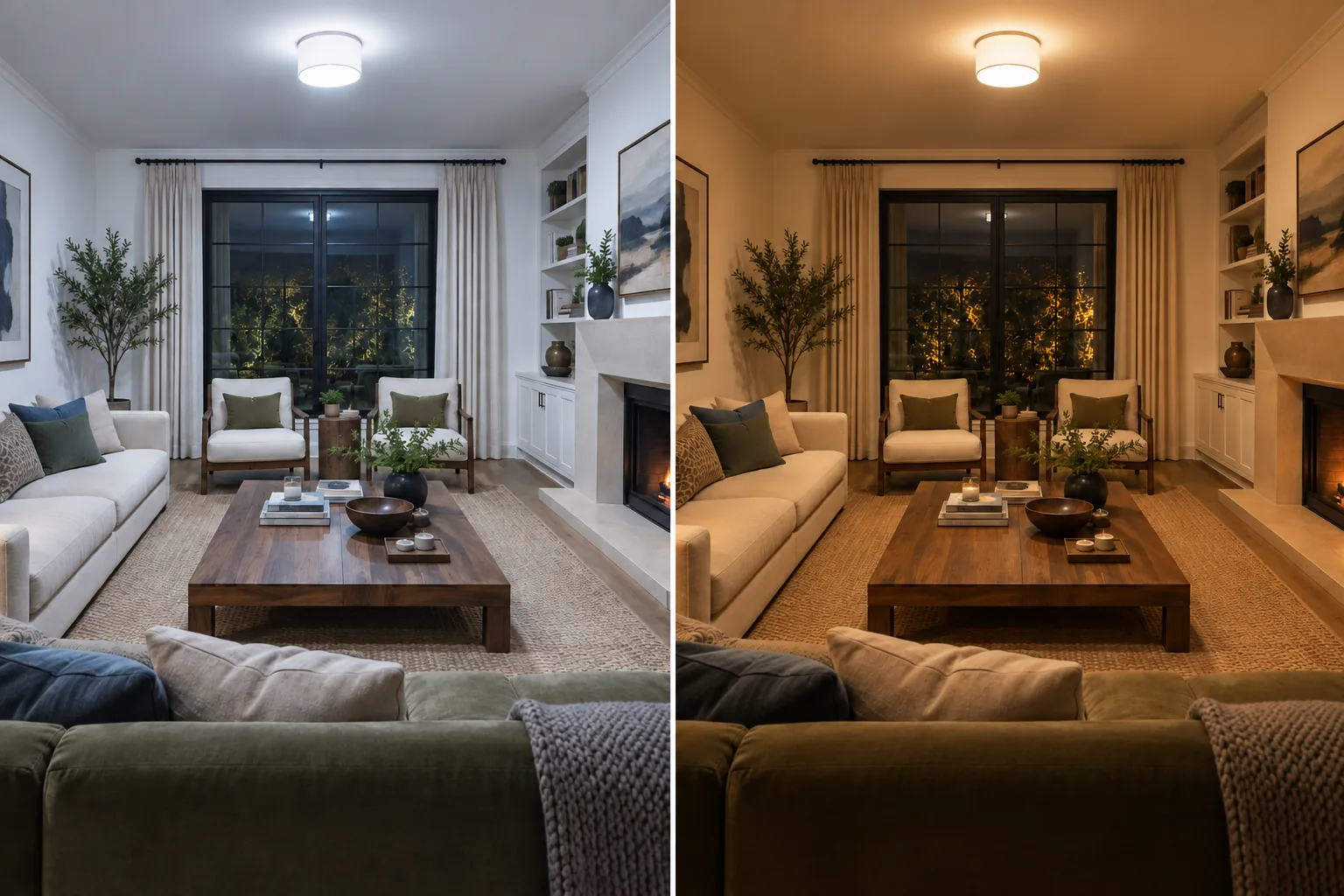
That warmer range tends to flatter wood tones, textiles, skin tones, art, and the softer materials we use to make a home feel comfortable.
Move too far into cooler temperatures and a warm paint color can suddenly look gray. Wood can lose its richness. A cozy room can start feeling clinical.
That doesn’t mean every single bulb in your house needs to be identical.
Task-heavy areas sometimes benefit from clearer, slightly cooler light.
But within one room, you generally want the color temperatures to feel intentional.
A warm lamp next to an icy-blue recessed light is the lighting equivalent of wearing one black shoe and one navy shoe. Technically possible. Visually irritating.
4. Everything Is Equally Bright
More light is not always better.
A room where every corner is equally illuminated tends to feel flat because your eye has nowhere specific to go.
Contrast creates atmosphere.
Think about a restaurant you actually enjoy sitting in. The entire room usually isn’t flooded with uniform light.
Your table is illuminated.
The bar might glow.
Artwork or shelving may be highlighted.
Other areas intentionally fall into softer shadow.
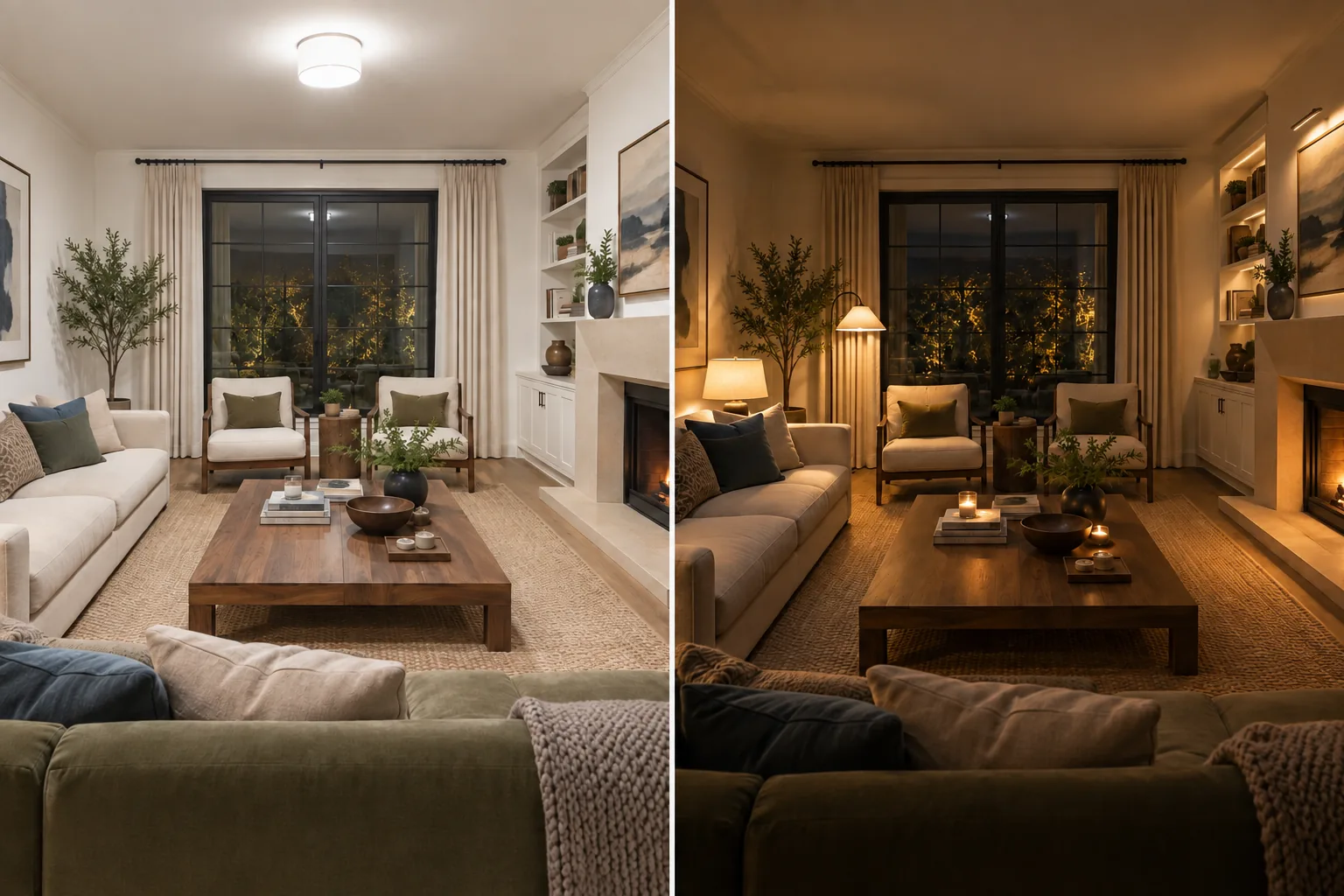
Your home benefits from the same principle.
Instead of asking, “How do I make this entire room brighter?” ask:
What actually needs to be illuminated?
Maybe the sofa area needs warm pools of light while the perimeter stays dimmer.
Maybe the dining table becomes the brightest object in the room during dinner.
Maybe a piece of art gets its own light while the rest of the wall quietly recedes.
Darkness isn’t a failure in a lighting plan.
Sometimes it’s part of the plan.
5. You Forgot What You Actually Do in the Room
Lighting should support behavior, not just furniture placement.
A beautiful floor lamp in the corner is useless as a reading light if the person reading is sitting eight feet away from it.
Before adding more fixtures, think through how the room is actually used.
Where do you read?
Where do you work?
Where do people usually sit when you entertain?
Do you watch television here?
Do you need enough light to play games, pour drinks, or help a child with homework?
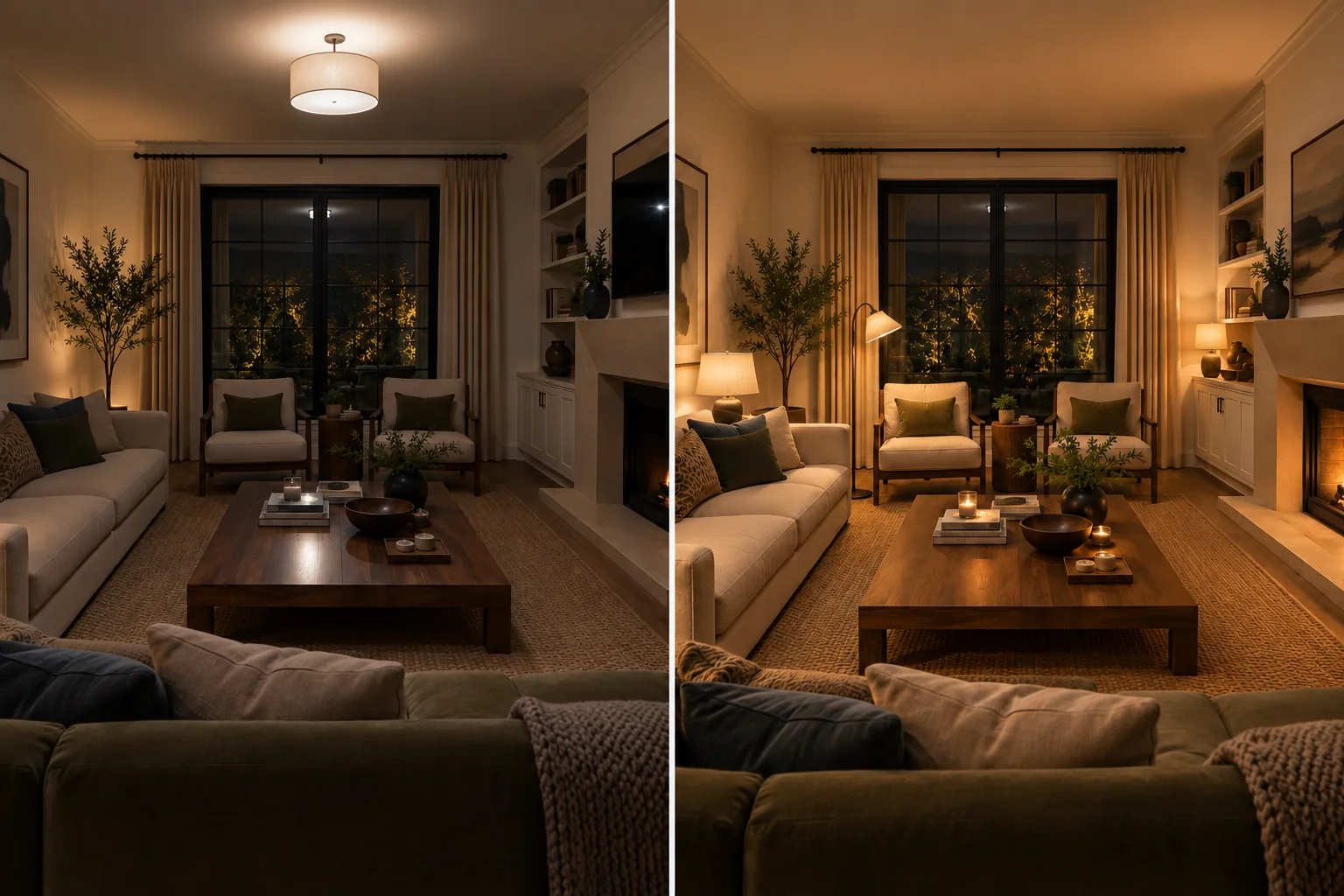
The answer may change depending on the time of day.
That is exactly why multiple light sources are useful.
A living room might need brighter lighting when people are cleaning or working, softer lighting for conversation, and very low lighting when watching television.
This is also where dimmers earn their keep.
You shouldn’t need one fixed lighting condition for every activity that happens in the room.
Humans, inconveniently, do more than one thing.
6. Your Fixtures Are the Wrong Scale
Lighting fixtures are furniture for the ceiling and walls.
Their scale matters just as much.
An undersized pendant over a large dining table can make the whole arrangement feel weak. Tiny lamps on substantial nightstands can look accidental. A floor lamp that is too small beside an oversized sectional can practically disappear.
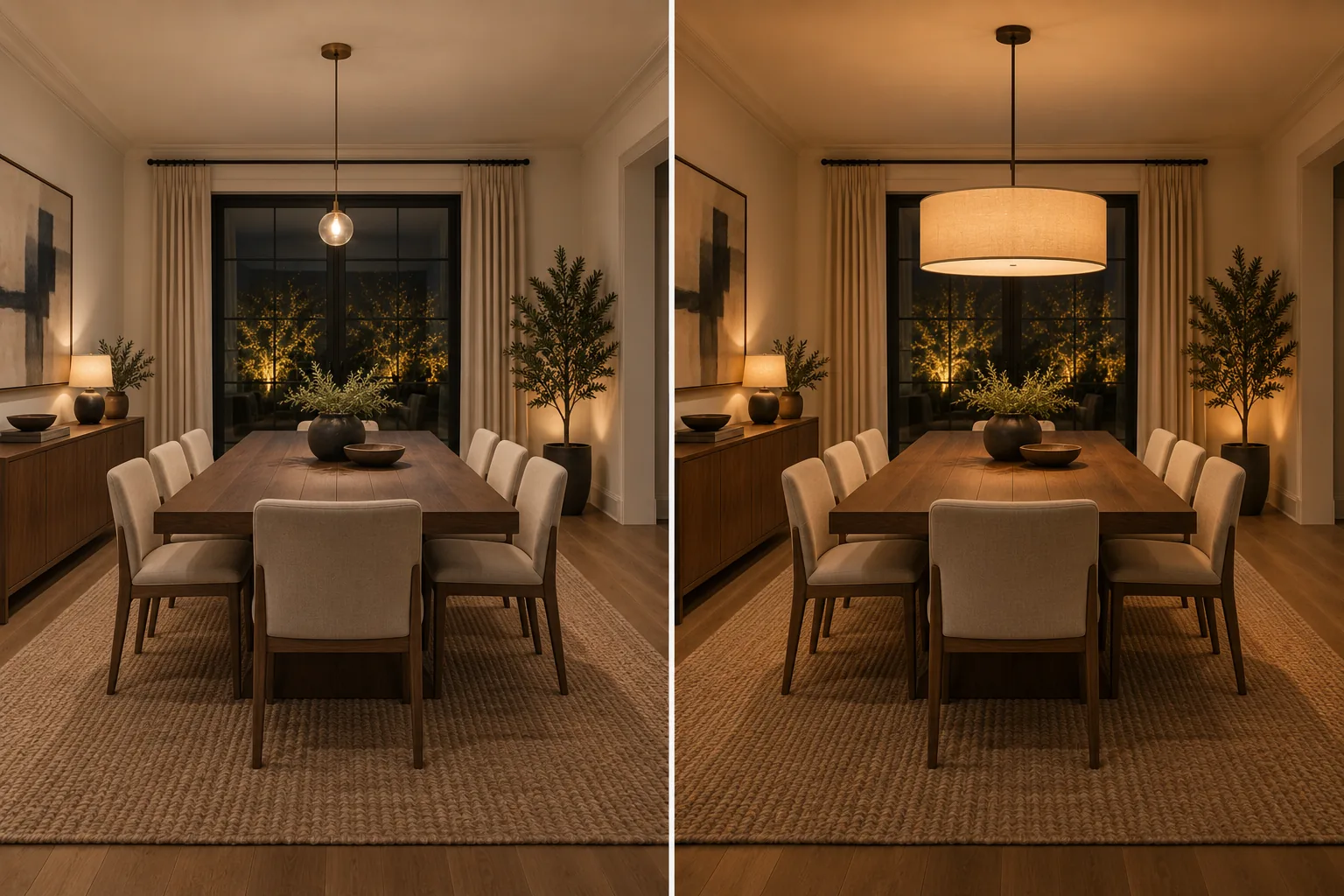
The opposite can also happen.
A fixture can overwhelm a small table or hang so low that it visually compresses the room.
Before buying a light fixture, consider its relationship to the objects around it.
For a dining pendant or chandelier, look at the size of the table rather than just the dimensions of the room.
For a table lamp, consider the width and height of the furniture beneath it.
For sconces, think about what they are framing.
Good lighting shouldn’t feel like something that was added after the room was finished.
It should feel like part of the architecture of the space.
7. You Designed the Room for Noon
Natural light covers a multitude of design sins.
During the day, windows add direction, shadow, movement, brightness, and subtle changes in color.
Then around 7:00 PM, all of that disappears.
What’s left is your actual lighting plan.
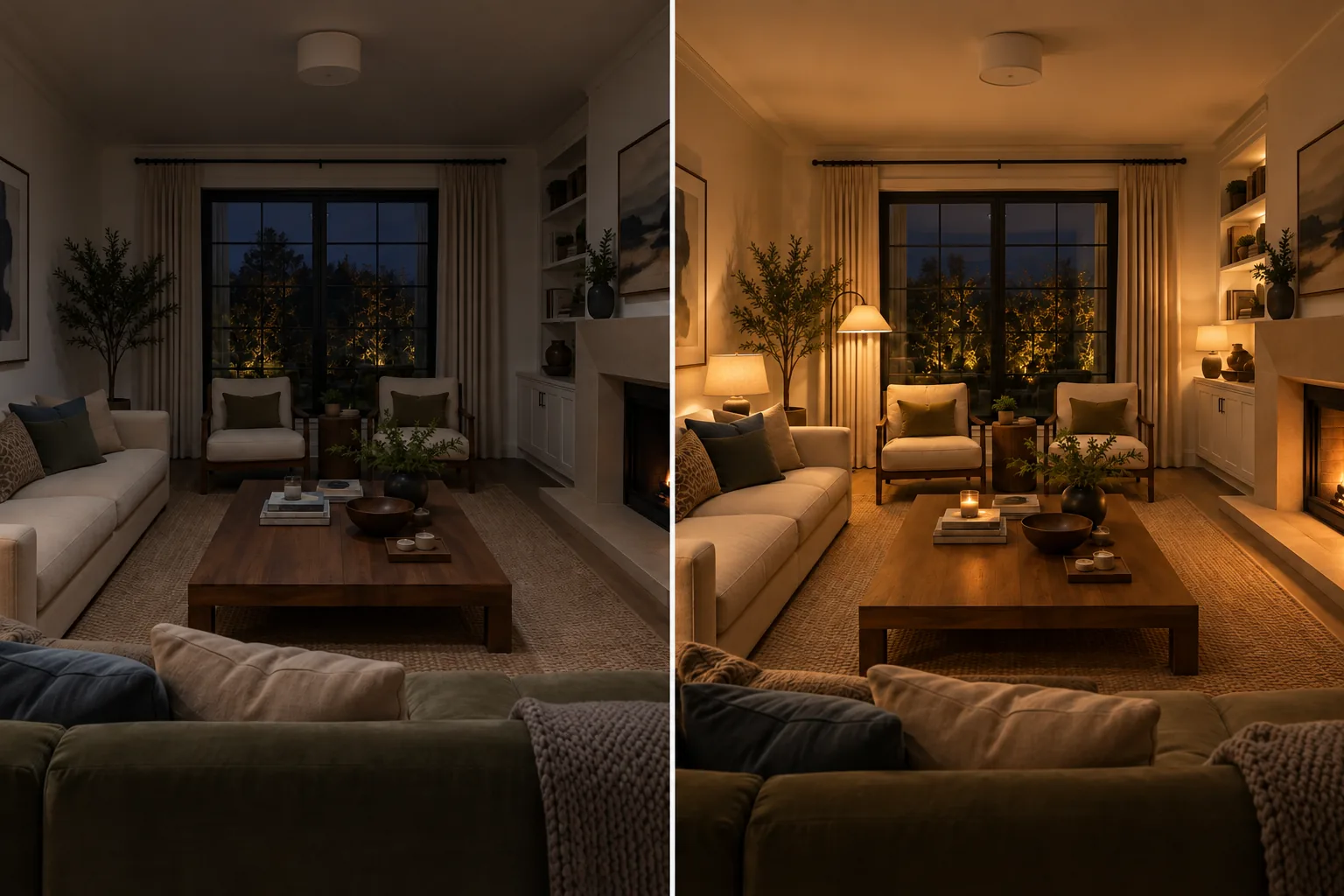
This is why I like evaluating rooms at more than one time of day.
A paint color that feels beautiful in afternoon sun may shift completely under artificial light.
A dark corner that seems charming during the day might turn into a black hole at night.
A room that feels bright enough at 2:00 PM may suddenly need another lamp beside the sofa.
When you’re designing a space, look at it in the morning, afternoon, and evening.
Turn the lights on.
Turn some of them off.
Sit where you actually sit.
See what your materials look like after dark.
Your room has a nighttime personality whether you intentionally designed one or not.
You might as well make it good.
A Better Lighting Plan Doesn’t Necessarily Mean More Fixtures
Before buying another lamp, start by looking at what you already have.
- Try turning off the overhead light and using only your lamps.
- Move a table lamp to another part of the room.
- Swap a cool bulb for a warmer one.
- Install a dimmer.
- Add one light source at a different height.
- Illuminate something worth looking at.
Sometimes the biggest improvement comes from using less light more intentionally.
Because a room doesn’t necessarily need to be brighter.
It needs to feel better.
And good lighting is one of the fastest ways to change how a space feels without changing the room itself.
Interior Design That Goes Beyond How a Room Looks
At rbkh design, I think about interiors as more than a collection of furniture, finishes, and pretty objects.
Lighting, texture, acoustics, material, color, and the way you move through a room all affect what it actually feels like to live there. That is the thinking behind sensory styling, and it’s built into every room I design.
If your room looks good on paper but still doesn’t feel quite right, the answer may not be another piece of furniture.
Sometimes it’s about looking at the space differently.
Explore rbkh design services to create a room that works visually, practically, and atmospherically.
Frequently Asked Questions
Why does my room feel bad at night but fine during the day?
Daylight does a lot of work that is easy to take credit for. It comes from one direction, casts shadows, changes through the day, and fills a room evenly without flattening it. After sunset, all that is left is your artificial lighting plan. If that plan is a single overhead fixture, the room loses its depth and contrast the moment the sun goes down, even though nothing about the furniture or paint has changed.
What color temperature is best for living room lighting?
For most residential living spaces, 2700K to 3000K. That warmer range flatters wood tones, textiles, skin tones and art, which is most of what a comfortable room is made of. Go cooler and a warm paint color can read gray, wood loses its richness, and the room starts to feel clinical. Task-heavy areas sometimes benefit from slightly cooler light, but within a single room the color temperatures should feel intentional rather than mixed by accident.
Why does my room feel dark even with all the lights on?
Usually because every light is at the same height and the same brightness. One ceiling fixture washes a room in uniform light, which erases the shadows and contrast that make a space read as three-dimensional. Adding light at lower levels, a table lamp at seated eye level or a floor lamp beside a chair, will make a room feel brighter and more comfortable than turning the overhead up.
What is layered lighting?
Layered lighting means using several kinds of light together instead of one fixture doing everything. Ambient lighting handles overall illumination, task lighting covers where you actually need to see, accent lighting draws attention to art or architecture, and decorative lighting contributes to the room visually even when it is not the main source. A typical layered plan might be recessed lights, two table lamps, a floor lamp by a chair and a picture light over art.
How many light sources should a room have?
There is no fixed number, but most living rooms and bedrooms need at least three sources at two or more heights. The more useful question is what the room is used for. List what actually happens there, reading, working, watching television, entertaining, then make sure each of those has light that suits it. Dimmers let one fixture serve several of those conditions.
Do I need to buy more lamps to fix my lighting?
Often not. Before buying anything, try turning off the overhead and using only your lamps, move a table lamp to a different part of the room, swap a cool bulb for a warm one, or install a dimmer. Most rooms improve more from using the light they already have more intentionally than from adding another fixture.
How do I choose the right size light fixture?
Size the fixture to what it relates to, not to the room as a whole. A dining pendant or chandelier should be scaled to the table beneath it. A table lamp should be scaled to the width and height of the furniture it sits on. Sconces should be scaled to whatever they are framing. An undersized pendant over a large table makes the whole arrangement feel weak, and an oversized fixture in a small space visually compresses the room.
Next: why a room can look fine and still feel wrong