
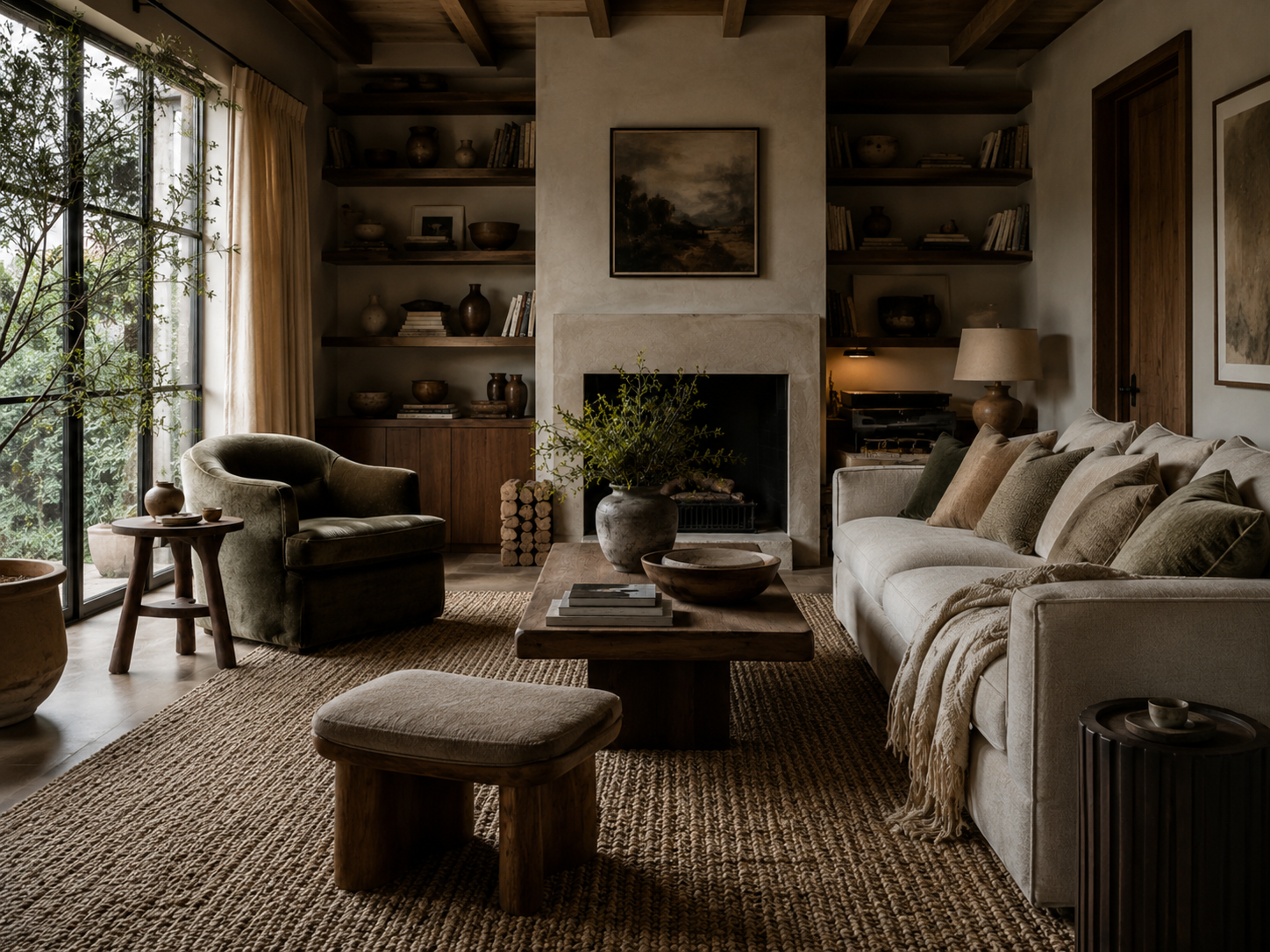
Texture, scent, sound, light, and the small rituals of a day are not finishing touches. They are part of what makes a room feel finished in the first place.
When most people think about designing a room, they think about what they can see.
The furniture. The color palette. The rug. The lighting. The art.
But that’s only part of what makes a room feel good to live in.
Sensory styling is the layer beyond how a room looks. It’s how the space feels under your feet, how the materials feel when you touch them, what the room sounds like, what it smells like, and how the lighting shifts the mood throughout the day.
Most design processes treat those things as finishing touches.
I don’t.
They’re part of the design from the beginning, and they’re a big part of why I created my Cinematic Room package.
The room you see is not always the room you experience
A photograph can tell you whether a room looks beautiful.
It cannot tell you what it feels like to sit in it.
A living room can photograph beautifully and sound like an echo chamber because every surface is hard.
A neutral room can look warm but feel cold because everything is glossy stone, glass, and metal.
A bedroom can look calm and still feel strangely clinical because the lighting is too bright at night or there is nothing softening the sound.
These things are subtle, but you notice them.
You may not walk into a room and think, the acoustics in here are terrible.
You just know the room feels a little uncomfortable.
Visual design asks, does this look right?
Sensory design asks, does this feel the way I wanted this room to feel?
Those are not always the same thing.
The layers I think about
Texture
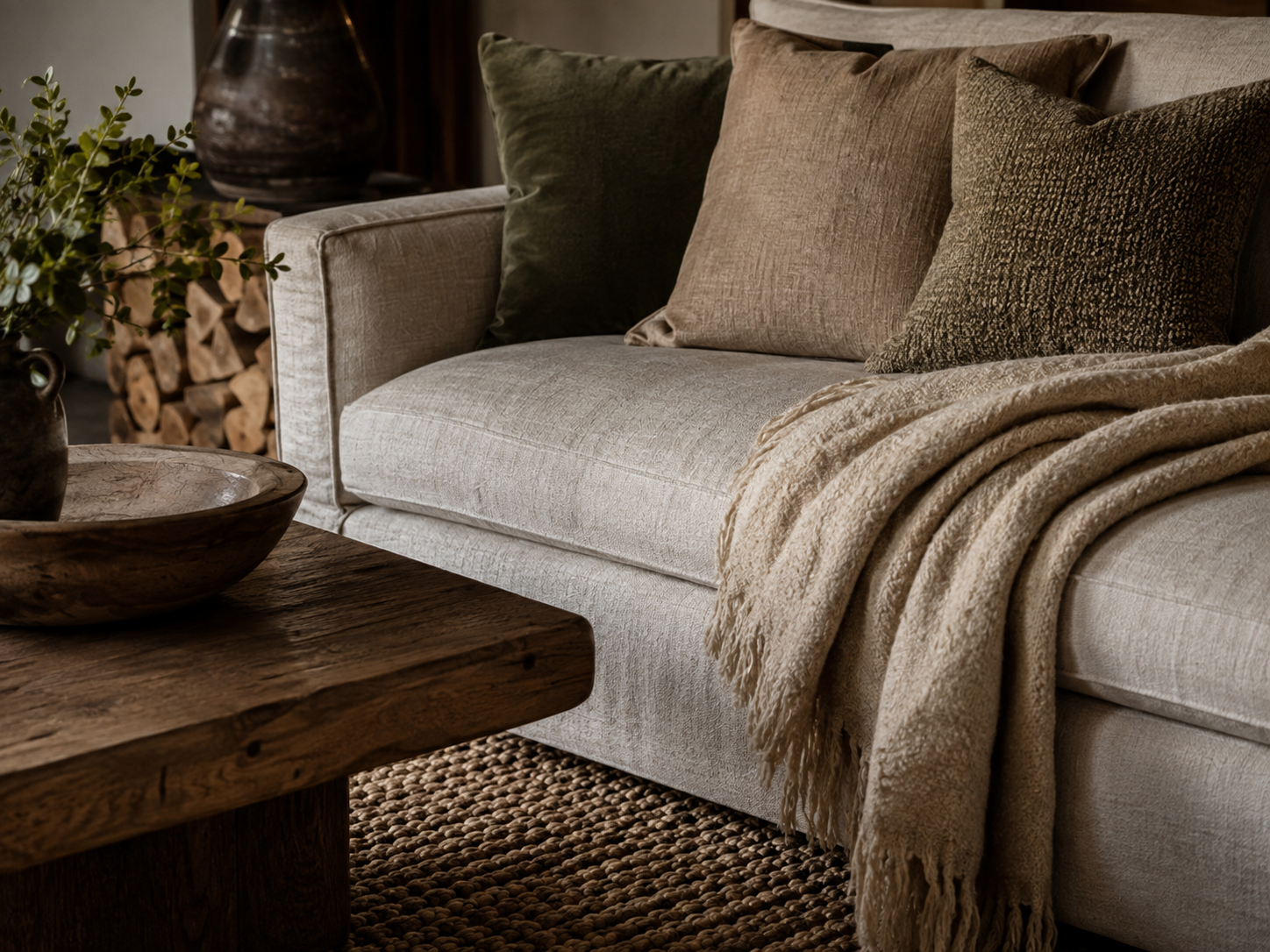
Texture is probably the most familiar part of sensory design because designers already use it constantly.
But I’m thinking about more than whether different textures look good together. I’m thinking about what they actually feel like.
A room full of smooth, hard materials can look incredibly polished and still feel sterile.
So I want contrast.
Soft linen against smooth wood.
A thick wool rug underneath a stone coffee table.
A leather chair with a textured throw.
Sheer drapery against plaster walls.
You don’t necessarily need more things in the room. Sometimes you just need more variation in how the things you already have feel.
Scent
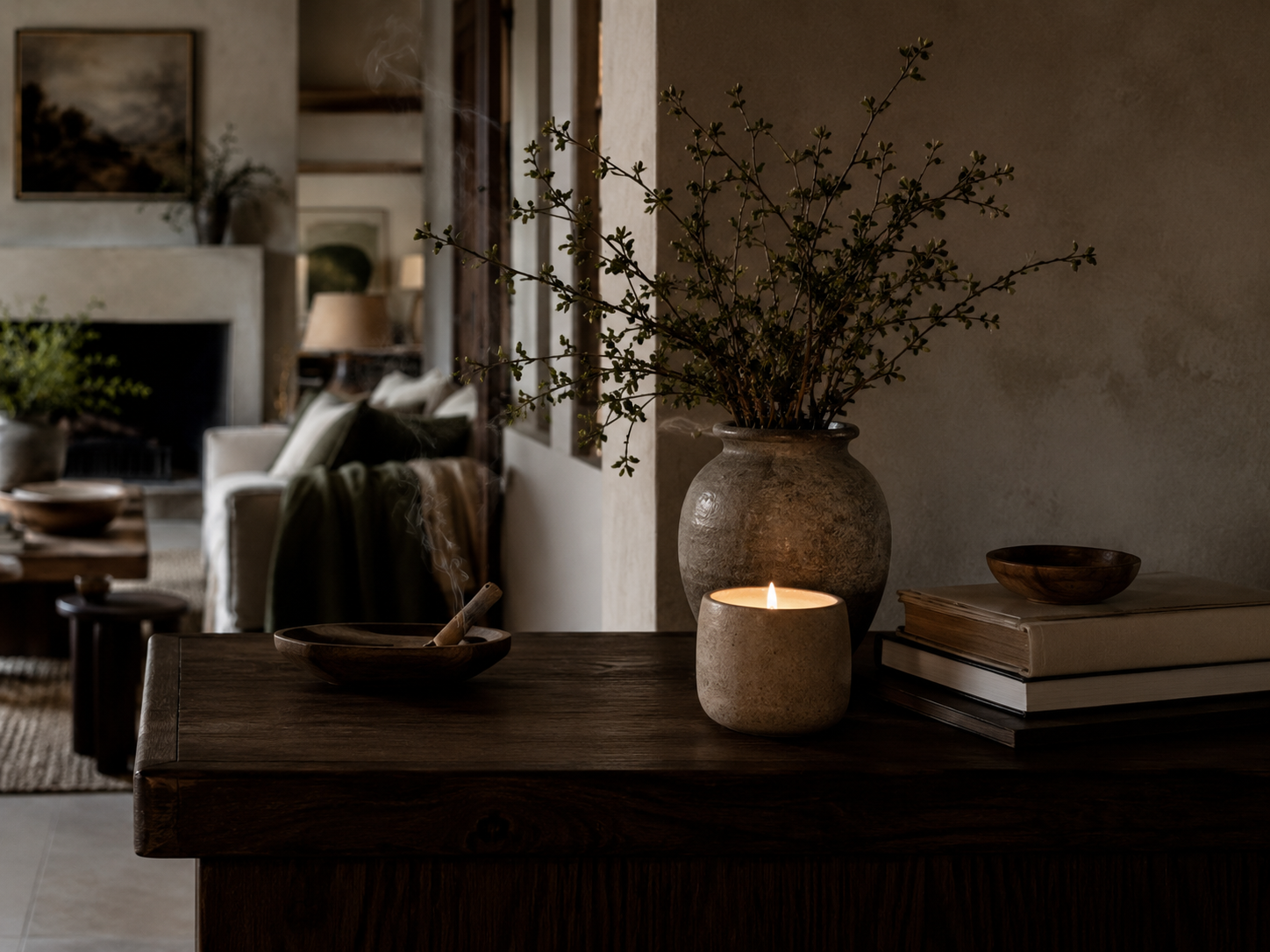
Scent might be the most overlooked layer of a room, which is strange considering how quickly we notice it.
The scent should make sense with the atmosphere you’re already creating visually.
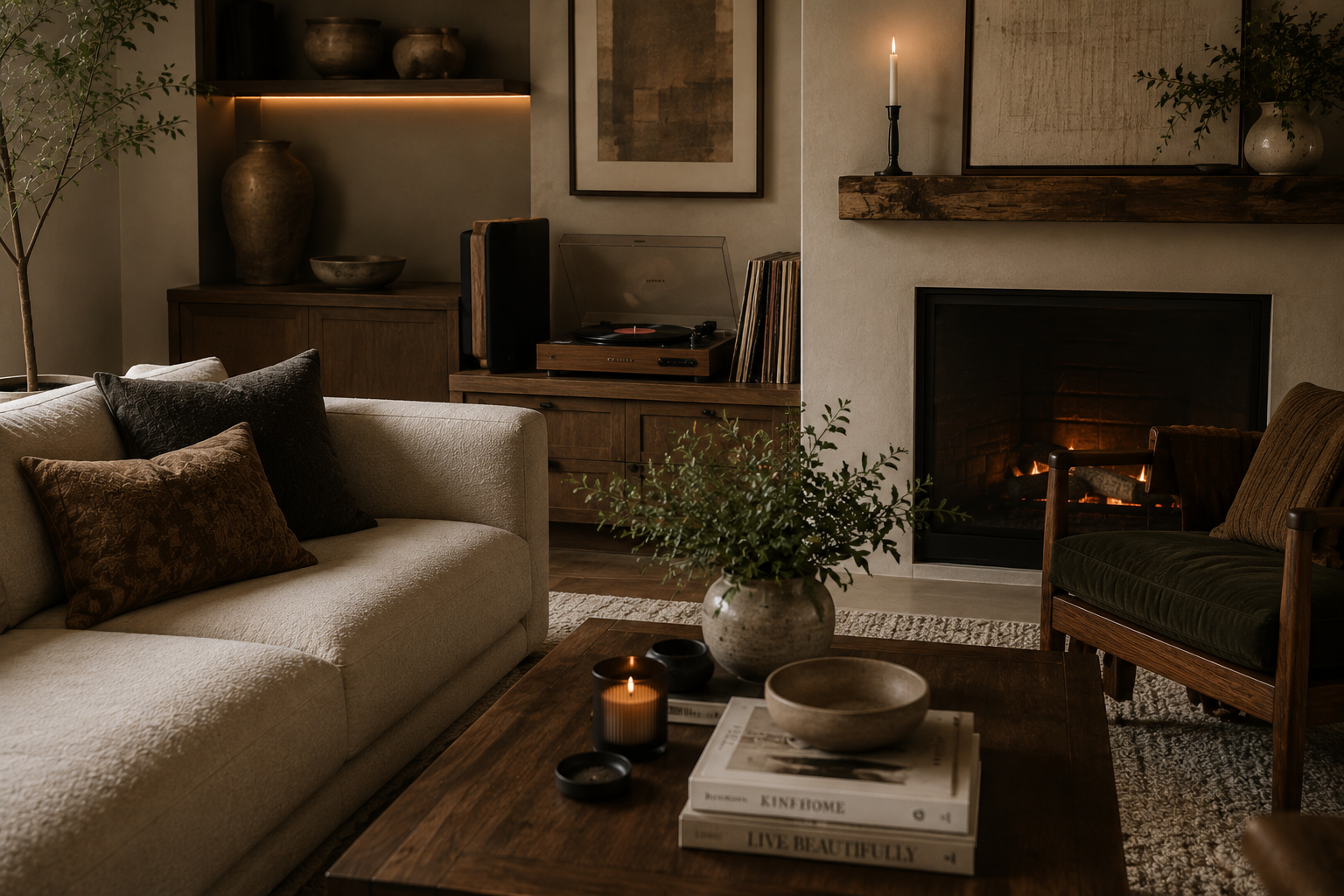
A darker room with warm wood, deep colors, and softer lighting might want something woody, smoky, herbal, or earthy.
A light, airy room might feel better with something green, clean, or subtly botanical.
There are no rigid rules here. I am not assigning every beige room a mandatory fig candle.
The point is simply that what you smell should support what you see.
When those two things fight each other, you feel the disconnect even if you can’t quite explain why.
Lighting mood
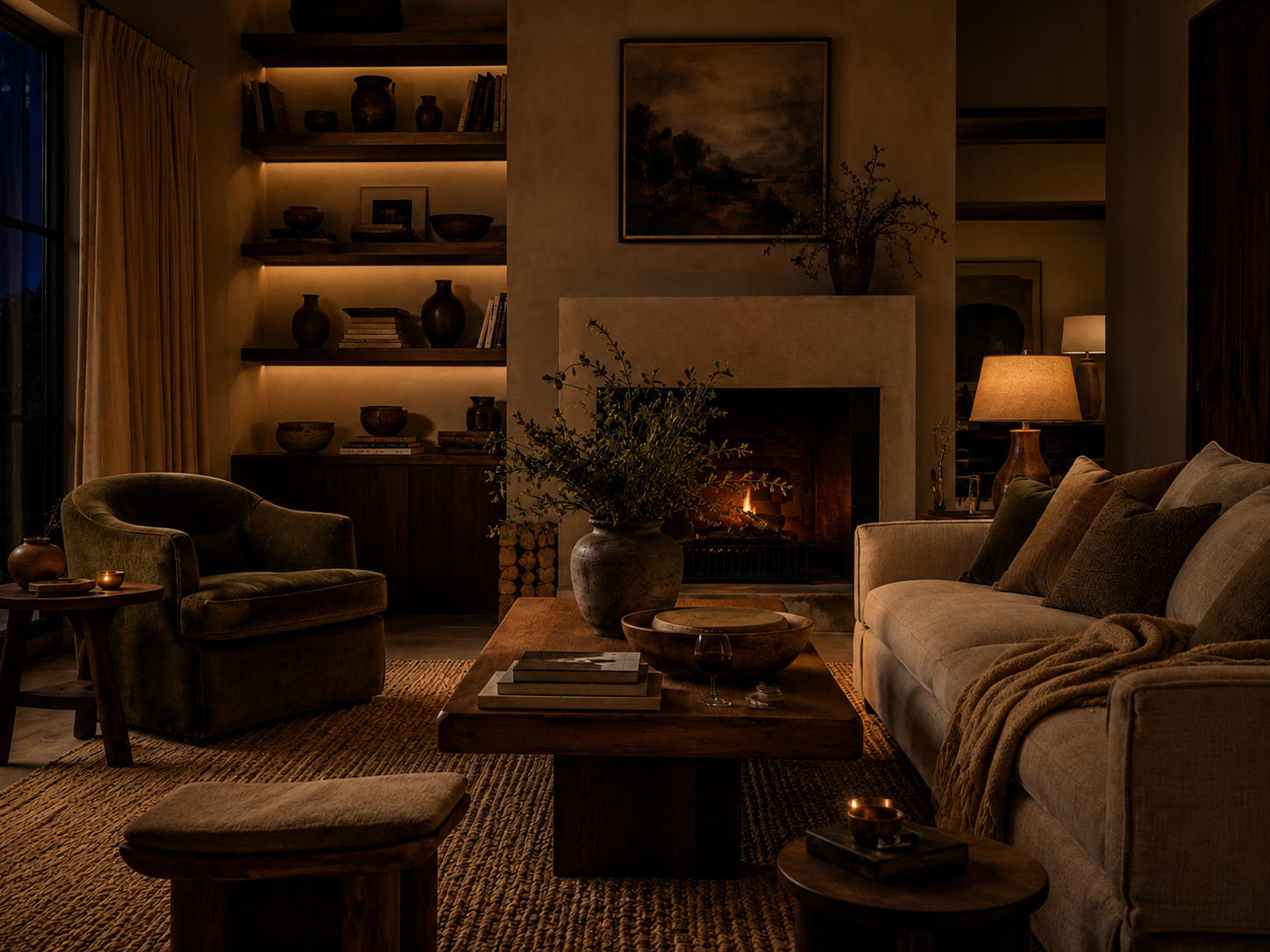
Lighting design is not just choosing attractive fixtures.
I think about how you need the room to feel at different times of day.
The lighting you want while getting ready at 7:00 in the morning is probably not the lighting you want while drinking wine on the sofa at 9:00 at night.
So instead of giving a room one lighting condition and expecting it to somehow work for everything, I think in layers.
Ambient light.
Task light.
Accent light.
Daylight.
And, importantly, what happens when most of those lights are turned off.
A room should still work after dark without making you feel like you’re sitting under interrogation lighting.
Sound
Some rooms simply sound better than others.
Rugs, upholstery, curtains, books, artwork, and other soft or irregular surfaces absorb and diffuse sound. Large expanses of hard flooring, glass, and stone bounce it around.
That matters more than people realize.
But I also think about what is actually supposed to happen in the room.
Do you always have music playing while you cook?
Is there a record player in the living room?
Is the bedroom meant to feel especially quiet?
Is the family room competing with a television, kids, and a dog who has strong opinions about Amazon deliveries?
Sound is part of how the room is used, so it belongs in the design conversation.
Room rituals
This may be my favorite part.
Rooms aren’t really experienced as static spaces. We experience them through dozens of tiny routines.
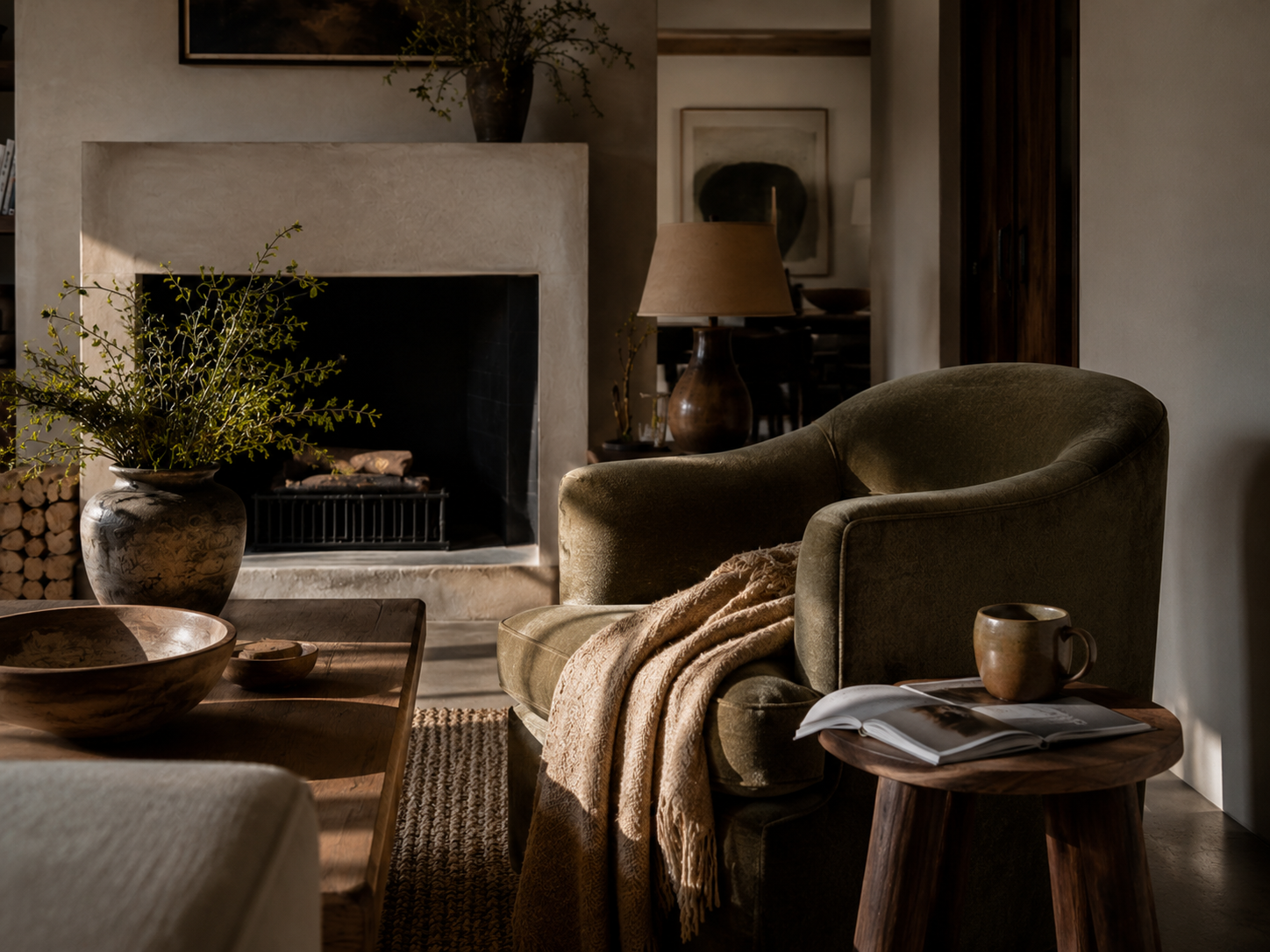
Where you set your coffee in the morning.
Where you curl up to read.
Where your bag lands when you walk through the door.
What happens when friends come over.
How the living room changes once the kids go to bed.
The fifteen minutes you spend winding down before you sleep.
Those small rituals tell me much more about what a room needs than simply knowing you want a “beautiful living room.”
The goal is not just to make everything fit.
It’s to design the room around the life that is actually going to happen there.
How this shows up in my Cinematic Room package
This thinking is built into my Cinematic Room package.
It includes everything in my Studio Edit, so you still get the full visual design direction for the room, but then we take it one step further.
The idea is to help you understand not just what the finished room will look like, but what it will actually feel like to live in.
That includes:
- A sensory styling guide covering texture, scent, lighting mood, acoustics, and the rituals the room should support
- A motion walkthrough of the finished design so you experience the space as something you move through, rather than one static rendering
- A custom reveal soundtrack created around the mood and atmosphere of your room
- An alternate layout option so we can explore another way the room could function
- An additional round of refinement focused on both the layout and overall mood
It is intentionally more immersive than a standard room design.
Because some clients aren’t just trying to figure out which sofa to buy.
They’re trying to create a room that feels a certain way.
The point of all of this
Good interior design has always been sensory.
We just tend to talk about the visual part because it is the easiest part to photograph.
But you do not experience your home through a photograph.
You walk across the floor barefoot.
You turn the lamps on when it gets dark.
You hear music coming from the kitchen.
You notice how the room feels when it is quiet.
You curl up underneath the throw that looked great in the rendering but, more importantly, is actually soft.
That is the part I’m interested in.
Texture, light, sound, scent, and the little rituals that make up your day are not decorative extras you add once the room is finished.
They are part of what makes the room feel finished in the first place.
Frequently Asked Questions
What is sensory styling in interior design?
Sensory styling is the layer of design beyond how a room looks. It covers how the space feels underfoot and to the touch, what it sounds like, what it smells like, and how the lighting shifts the mood from morning to night. It is treated as part of the design from the beginning rather than a finishing touch.
Why can a room look beautiful in photos but feel wrong in person?
Photographs only capture the visual layer of a room. A space can photograph beautifully and still sound like an echo chamber, feel cold because of glossy hard materials, or feel clinical because of harsh lighting after dark. Those sensory qualities are not visible in a still image, but they are the first things you notice when you actually live in the room.
How do you make a room feel good, not just look good?
Layer the lighting for different times of day, add contrast in texture so the room is not all smooth or all hard, use soft materials like rugs, upholstery, and curtains to improve how the room sounds, and think about the small daily rituals, like where you set a coffee cup, that the room needs to support.