
Where the money actually goes when you furnish a room from scratch, the costs everyone forgets, and what to protect when the budget gets tight.
One of the easiest ways to blow a room budget is to spend most of it before you’ve actually accounted for the whole room.
It usually goes something like this: you decide on a number, mentally give a very healthy portion of it to the sofa, and assume the rest will somehow work itself out.
It usually does not.
A full room has more pieces than people expect, and the categories that get forgotten first, rugs, lighting, window treatments, delivery, are often the exact things that make the room feel finished.
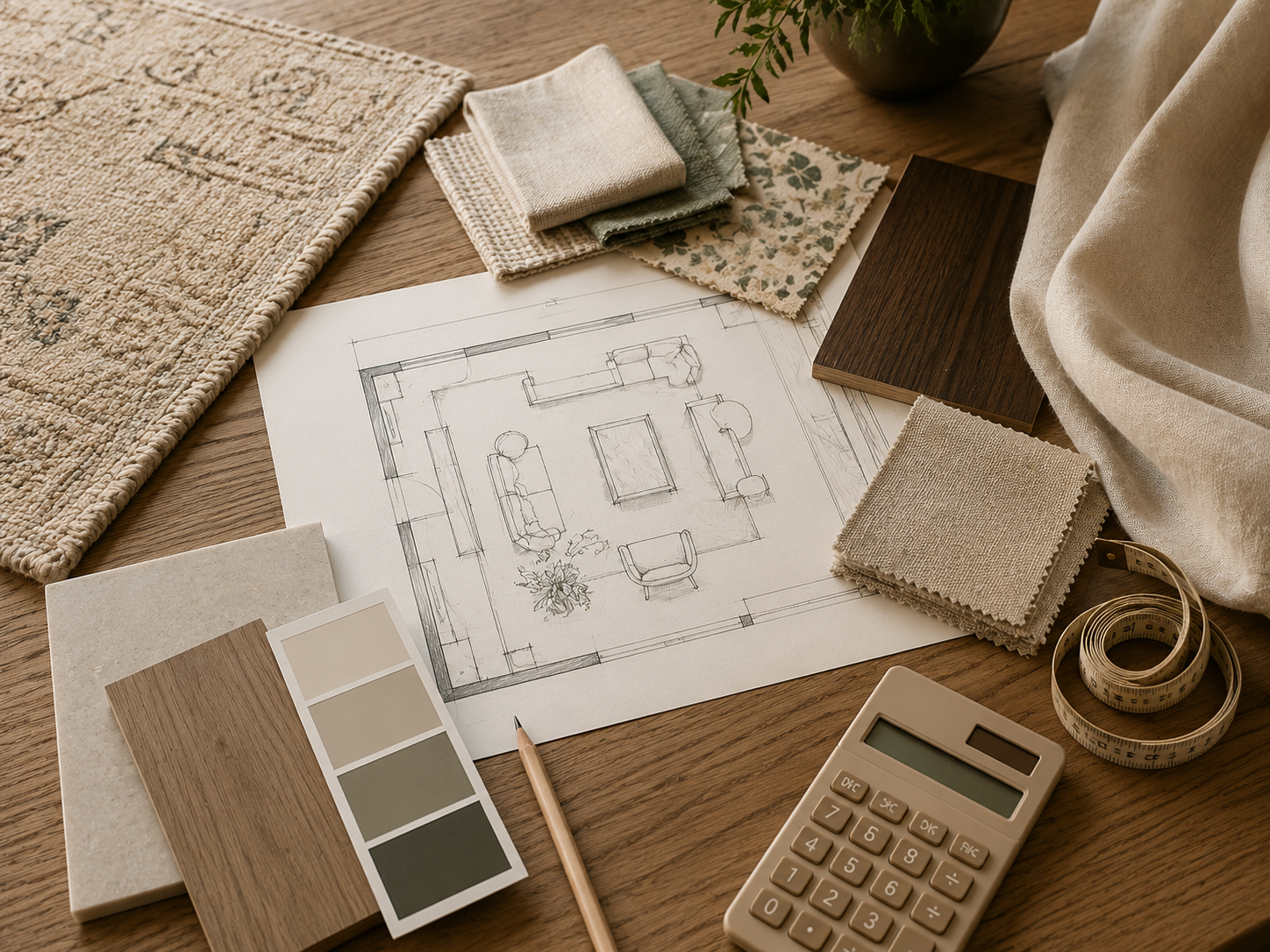
So before I start sourcing anything, I think about the entire room budget first.
Where the money actually goes
There is no perfect percentage that works for every room, but this is roughly how I think about a furnishing budget:
| Category | Share | What that includes |
|---|---|---|
| Upholstery | 35 to 40% | Sofa, sectional, accent chairs, upholstered pieces |
| Case goods | 15 to 20% | Coffee tables, side tables, consoles, storage |
| Rug | 10 to 15% | The piece grounding the entire furniture arrangement |
| Lighting | 10 to 15% | Decorative fixtures, lamps, sometimes installation |
| Window treatments | 10 to 15% | Drapery, shades, hardware, alterations, installation |
| Art + accessories | 10 to 15% | Art, pillows, objects, styling pieces |
These numbers will move around depending on the room, but the larger point is this:
The sofa is not the room.
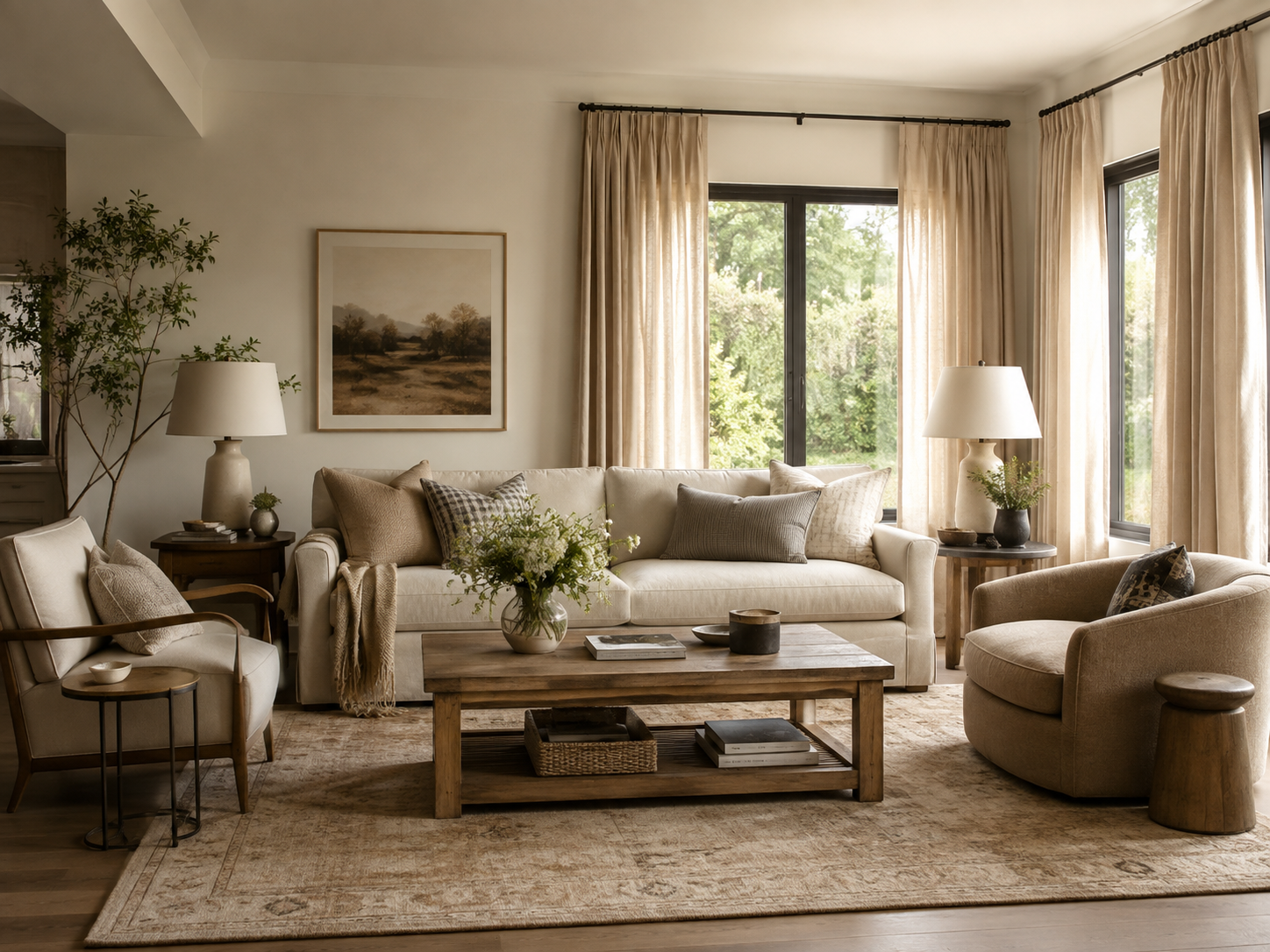
Upholstery deserves a healthy portion of the budget because you use it constantly, replacing it is expensive, and it sets a lot of the visual direction.
But rugs, lighting, and window treatments together can easily account for another third of the room.
Those are not the little extras you worry about if there is money left.
They are part of the budget.
The costs everyone forgets
There are also several very unexciting expenses that have a habit of appearing right when you thought you were done spending money.
Naturally.
Delivery
A side table may arrive in a cardboard box.
A 96-inch sofa probably will not.
Larger furniture often comes with freight, threshold delivery, room-of-choice delivery, or white-glove service. Depending on what you’re ordering, I like to leave roughly 5 to 10% of the furniture budget available for delivery-related costs.
Sometimes it’s included. Sometimes it very much is not.
Window treatment installation
Window treatments are rarely just the cost of the curtain panel.
There may also be rods, rings, brackets, custom sizing, hemming, steaming, and installation.
And yes, you can hang them yourself.
You can also spend two hours holding a level over your head while questioning every decision that led you here.
Both are options.
Electrical work
If we’re replacing a hardwired fixture where one already exists, installation may be simple.
If we’re adding sconces, relocating a fixture, or putting a chandelier where there currently is not one, now we’re talking about electrician time too.
The fixture and the installation are two separate numbers.
Rug pads
Deeply unglamorous.
Still necessary.
A good rug pad protects the rug, keeps it from sliding around, and makes it feel better underfoot.
It also somehow manages to be forgotten in approximately every initial room budget.
None of these expenses is usually catastrophic on its own.
Together, though, they are exactly how a room that was “on budget” suddenly ends up 10 or 15 percent over.
What I prioritize when the budget gets tight
Most budgets eventually reach the part where the wish list and the available number stop being friends.
That does not mean the room cannot work.
It just means we need to decide what matters first.
Here’s generally how I prioritize:
This is the order I prioritize purchases, not the order I allocate the budget. Everything still gets accounted for upfront, even if some pieces happen later.
1. Start with the hardest-working piece
In a living room, that is usually the sofa.
In a bedroom, it may be the bed or mattress.
I want to get the pieces right that you use every day and that would be annoying or expensive to replace later.
2. Get the rug right
The rug affects almost everything around it.
Scale.
Color.
Furniture placement.
How connected the room feels.
A properly sized rug can make fairly affordable furniture feel much more intentional.
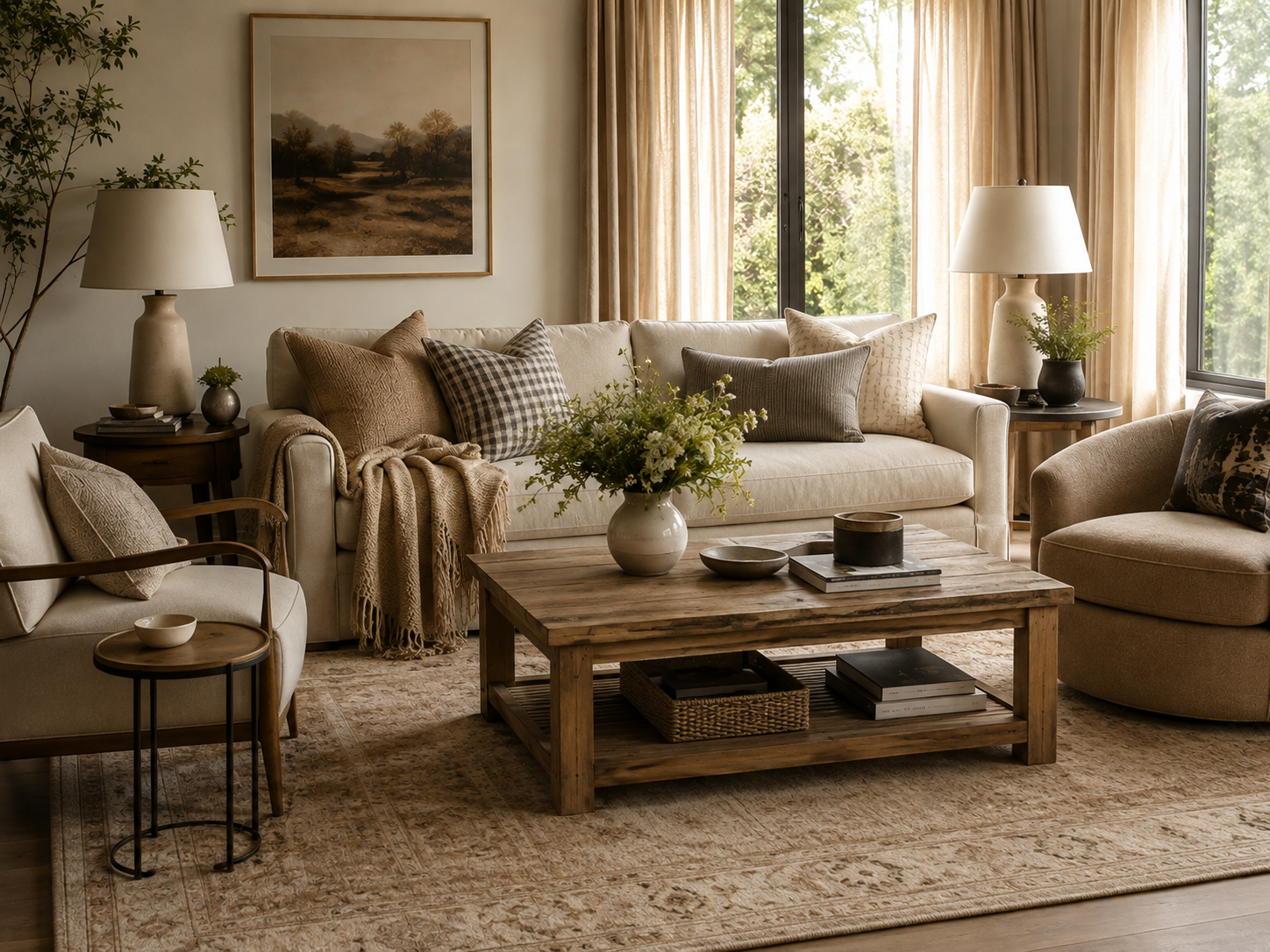
An undersized rug can make very expensive furniture look like it is nervously huddling together in the middle of the room.
3. Add the functional furniture
Coffee tables.
Side tables.
Storage.
Nightstands.
Consoles.
The pieces the room actually needs in order to work.
This is also a category where I am perfectly happy mixing higher and lower price points.
Not every side table needs a pedigree.
4. Fix the lighting
Lighting is one of the fastest ways to make a good room feel bad.
You can have beautiful furniture and still ruin the entire mood with one overhead fixture and a 5000K bulb giving suburban office break room.
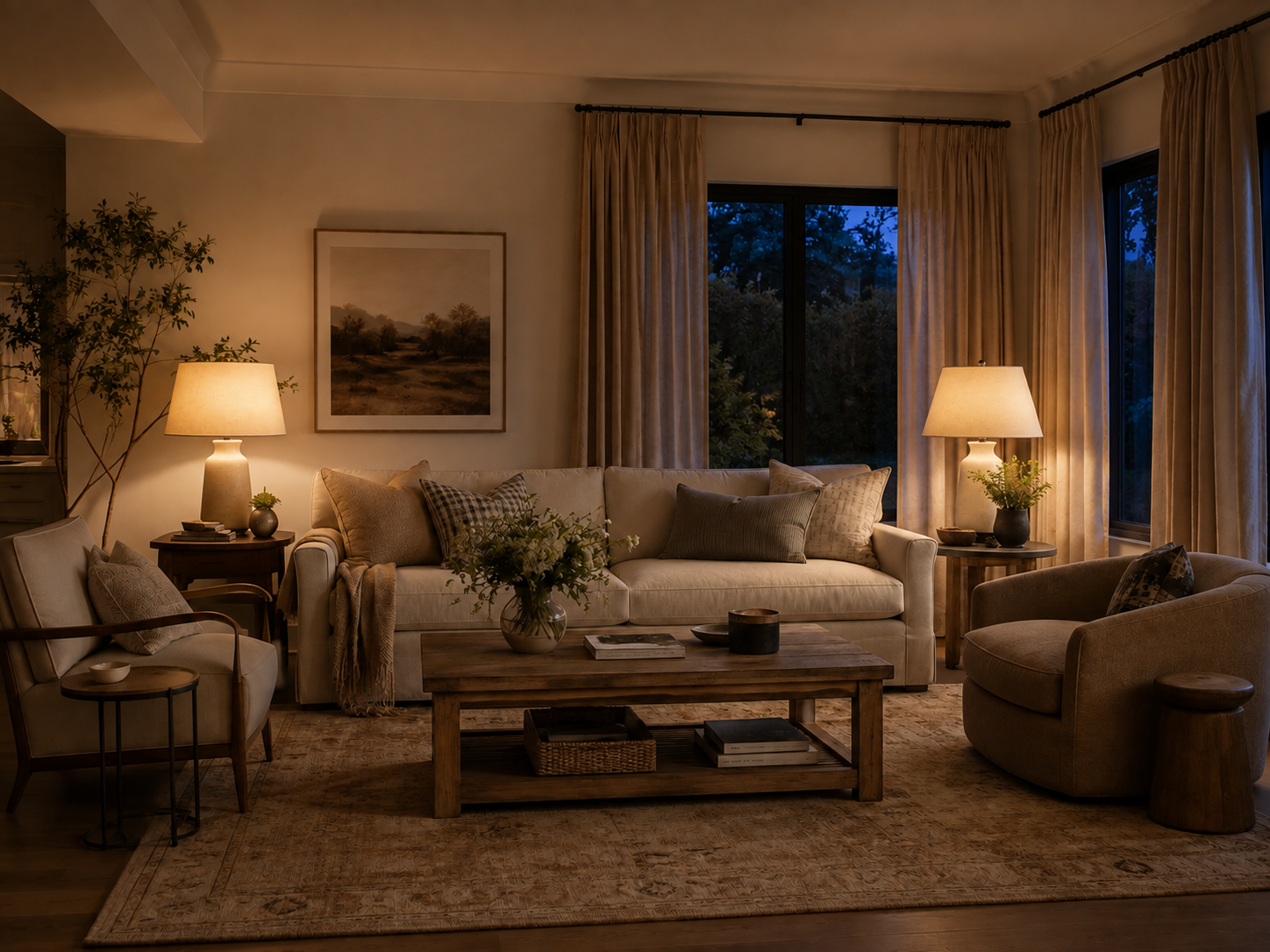
So even when the budget is tight, I still want a lighting plan.
That does not mean every lamp needs to be expensive.
It means the placement, temperature, and layers need to be intentional.
5. Plan for window treatments, even if you install them later
Window treatments are a meaningful part of the budget, so I account for them from the beginning. But if we need to phase the actual purchases, they can often be installed after the main furniture is in place without compromising the overall plan.
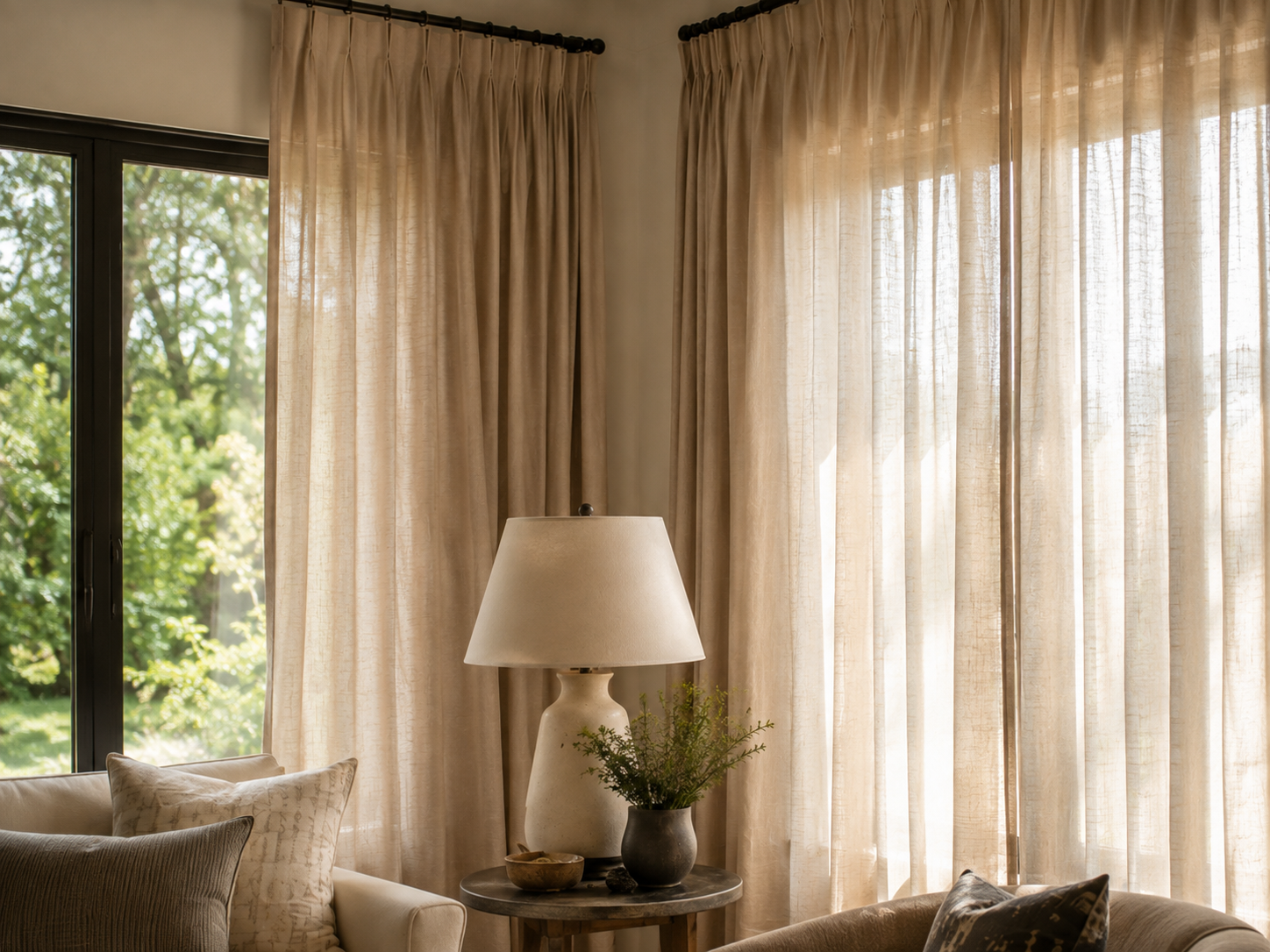
Unless privacy is an issue. Then, naturally, the neighbors have moved them up the list.
6. Let art and accessories happen over time
This is the easiest category to phase, and frankly, I prefer it that way.
A room where every accessory was purchased in one afternoon tends to look like every accessory was purchased in one afternoon.
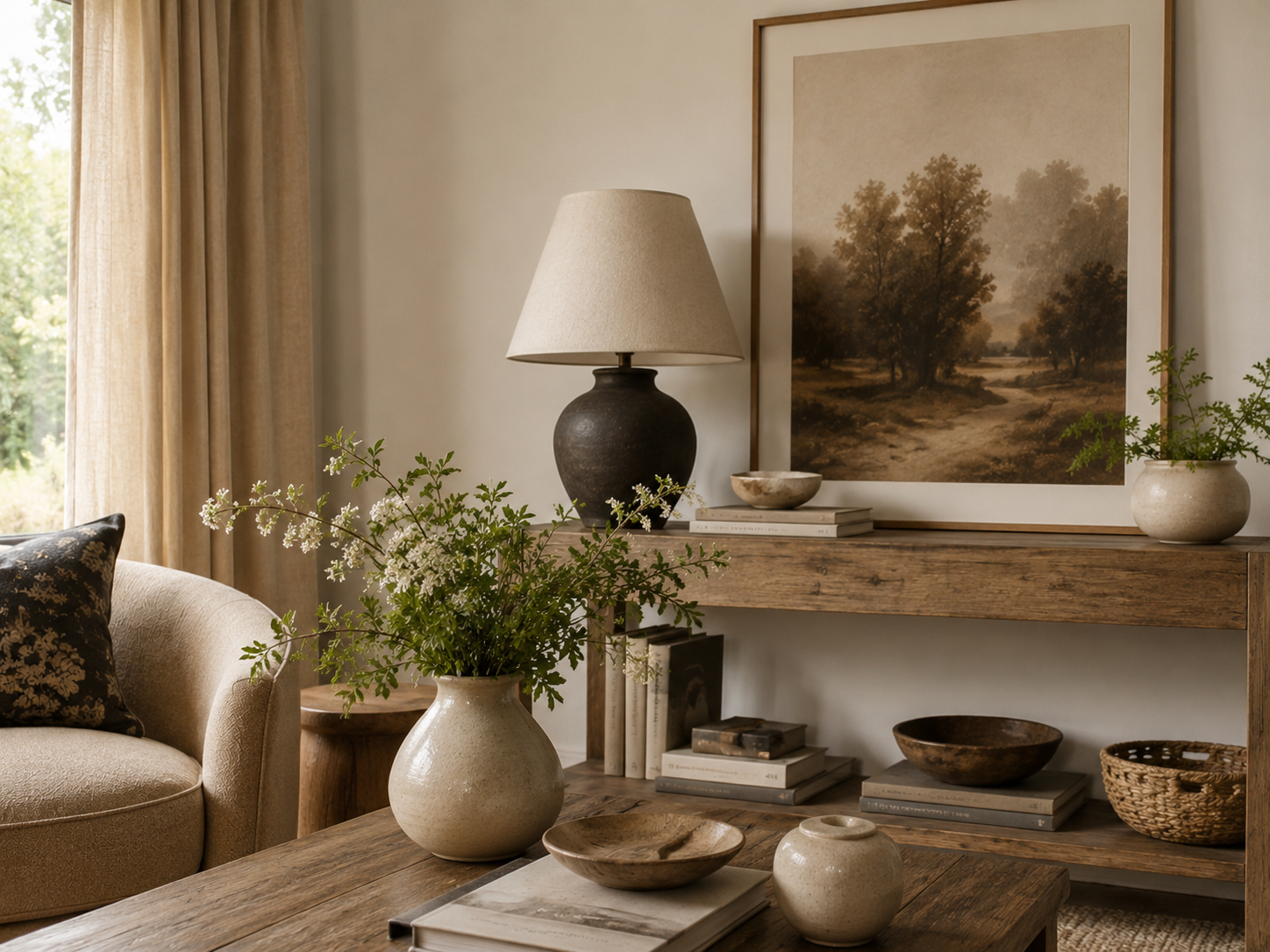
Some of the best rooms have a mix of things sourced immediately and things collected later.
You do not need to finish every surface on installation day.
Where I’ll spend more, and where I won’t
I do not believe every piece in a room needs to be expensive.
That is how you end up spending $18,000 on a room and somehow still needing lamps.
I would rather put the money into the pieces where quality, comfort, or longevity actually matters.
Worth spending more on
- Sofas and primary upholstery, especially pieces getting daily use
- A good rug, because it has such a big visual impact
- A mattress, for fairly obvious reasons
- Dining chairs, if you use them constantly or entertain often
- A statement light fixture, when it is doing a lot of the visual work in the room
Places I’m comfortable saving
- Side and accent tables
- Decorative objects
- Throw pillows
- Books and smaller styling pieces
- Art, especially early in the process
- Simple curtain hardware, when the drapery itself is the focus
My basic rule is this:
Spend more on the things you sit on, sleep on, touch constantly, or would hate to replace.
Save on the things you can swap out in twenty minutes without causing a small domestic renovation.
The mistake I see most
The biggest budgeting mistake is falling in love with one hero piece too early.
Maybe it is the sofa.
Maybe it is the designer chandelier.
Maybe it is the coffee table you have already mentally built your entire personality around.
And suddenly that one item has eaten half the furnishing budget.
Then we still need a rug.
And lamps.
And window treatments.
And side tables.
And art.
And delivery.
Now the room either goes over budget or gets stopped halfway through.
Neither is especially appealing.
A $7,000 sofa sitting on a too-small rug in front of bare windows does not somehow look more finished because the sofa was expensive.
I would much rather choose a slightly less expensive sofa and have enough money left to properly finish the room around it.
Because the room is what you experience.
Not the receipt for one piece of furniture.
The takeaway
The best room budget is not necessarily the biggest one.
It is the one that accounts for the whole room before anything gets purchased.
That means budgeting for the rug, the lamps, the window treatments, the delivery, and all of the other less exciting pieces before one beautiful sofa gets the opportunity to destroy the entire plan.
I prioritize the things that are hardest to replace, spend where quality actually matters, save where it does not, and leave room for the pieces that make the space feel complete.
Because a finished room is almost never about one spectacular purchase.
It is about everything working together.
Frequently Asked Questions
How should I budget for furnishing a room from scratch?
Roughly 35 to 40% on upholstery, 15 to 20% on case goods like tables and storage, 10 to 15% each on the rug, lighting, and window treatments, and 10 to 15% on art and accessories. Account for the whole room before committing a large share of the budget to one hero piece like the sofa.
What furniture costs do people forget to budget for?
Delivery, often 5 to 10% of the furniture budget for large pieces, window treatment installation such as rods and hemming, electrical work for new or relocated fixtures, and rug pads are the most commonly forgotten costs. Individually small, they can push a room 10 to 15 percent over budget together.
What should I prioritize first if my room budget is tight?
Start with the hardest-working piece you use daily, such as the sofa or bed, then get the rug right since it affects scale and furniture placement, add functional furniture like tables and storage, fix the lighting plan, and let art and accessories be phased in over time.